Evidence-Based Integration Of L-Prp-Enriched Fat Transfer Principles Into Non-Surgical Regenerative Aesthetics
Power of Your Own Blood: How PRP Science Is Improving Fat Transfer, Hair & Skin Treatments
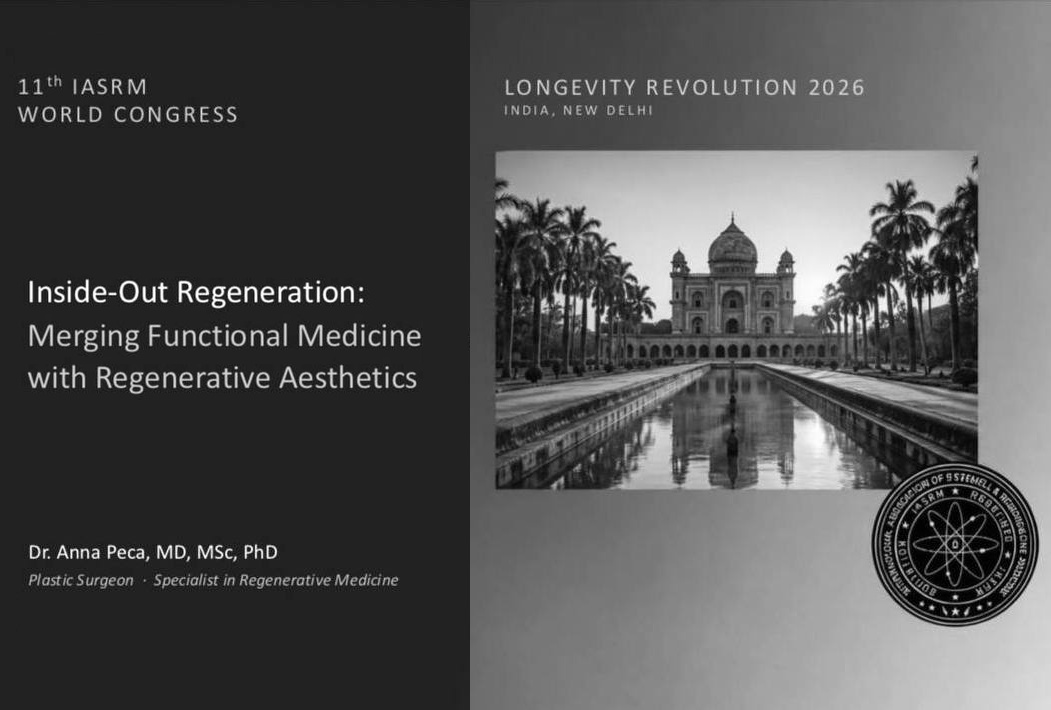
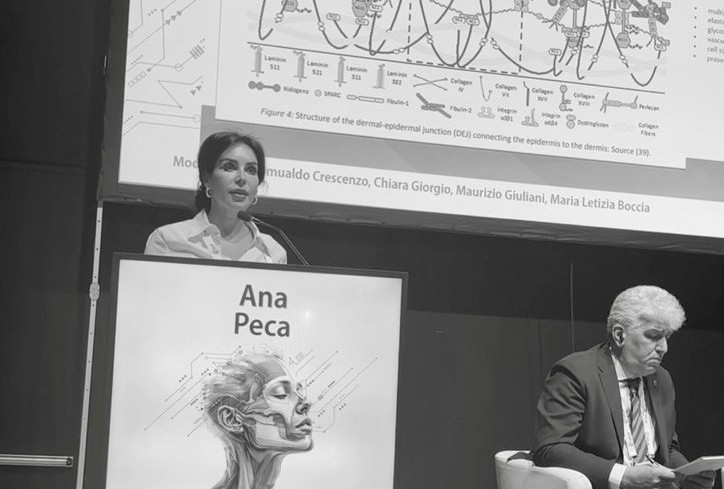
Dr Anna Peca presented a talk based on findings from her PhD research, explaining how a special type of platelet-rich plasma (PRP) — called L-PRP, which is enriched with white blood cells — can improve the results of fat transfer and other regenerative treatments.
PRP is made from a patient’s own blood and contains platelets and growth factors that help tissue heal and regenerate. Dr Peca’s research compared standard PRP with L-PRP and looked at how factors like activation and freezing affect their quality. Using imaging and tissue analysis, she showed that when L-PRP is combined with fat grafts (fat transferred from one part of the body to another, such as the face), it improves blood supply to the new tissue and reduces the risk of the fat breaking down or scarring — meaning the results last longer and look more natural.
She then explained how these findings apply directly in clinic: L-PRP injected into the scalp to help with hair loss, injected into the skin to improve skin quality and texture, and used to create plasma-based fillers. Dr Peca also covered practical details doctors need to get right — such as how the PRP is prepared, where exactly it’s injected, the right dose, and how often treatments should be spaced out. Her goal was to give practitioners a science-backed, reliable approach to using PRP-based treatments for more consistent, predictable results in hair and skin rejuvenation.