Aesthetics Medicine Festival 2024
Cyprus
31/05/2024
Cyprus
31/05/2024Why One Treatment Can’t Fix Ageing — The Face Ages on Different Levels
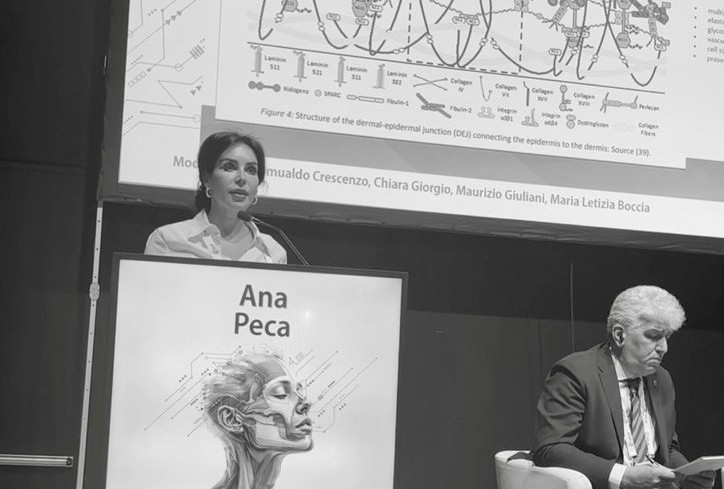
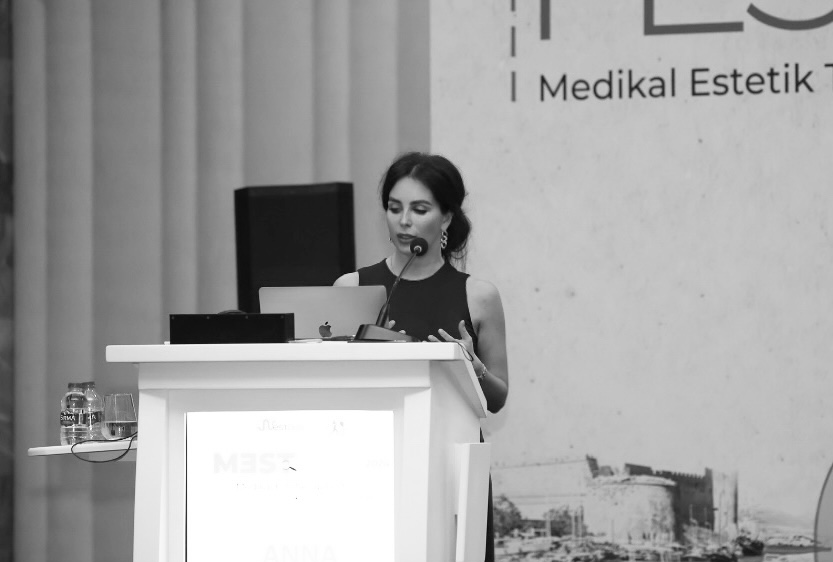
Dr Anna Peca presented a framework explaining that facial ageing isn’t something that happens only to the skin — it happens on several levels at once, from the bone all the way down to the individual cell. Understanding this, she explained, is the key to why a single treatment is rarely enough to produce truly natural, lasting results.
She walked the audience through ageing layer by layer, starting from the deepest structures. As we age, bone tissue gradually resorbs — the facial skeleton itself loses volume and changes shape, taking away the underlying support that once held everything else in place. Because that deep foundation weakens, the layers above it — fat compartments and soft tissue — begin to descend and shift, which is what we see and describe as facial ptosis, or sagging. This is why restoring structural volume is so important, and why treatments like fat transfer and bio- fillers are used — not just to “fill” a wrinkle, but to genuinely rebuild the lost architectural support the face used to have.
Once that deeper support is addressed, attention turns to the skin envelope itself — the skin that now has to drape over a changed structure. Here, technologies like RF microneedling help by tightening and lifting the skin, encouraging it to re-adapt and hold more firmly to the tissue beneath it. At the same time, the skin’s quality depends on having the right raw materials to rebuild itself — this is where amino acids and proteins come in, essentially “feeding” the skin the building blocks it needs to stay firm and resilient.
Finally, all of this is guided at the deepest, most fundamental level — the cellular level — where exosomes play a key signalling role, telling cells when and how to repair, regenerate, and produce new collagen.
Dr Peca’s core message was that these levels don’t work in isolation — they’re all connected, from bone to fat to skin to cell. Treating only one layer, while ignoring the others, will always produce limited or short-lived results. True regenerative aesthetics, she explained, means addressing structural support, skin quality, and cellular signalling together, as one coordinated strategy — which is what allows results to look genuinely natural and to last.
 Regenarative medicine
Yuron 10-year rule