Your body has been quietly storing something remarkable in your fat tissue all along: some of the most powerful regenerative cells you have. Nanofat is how we unlock them — rejuvenation powered entirely by your own cells.
We start by gently harvesting a small amount of your own fat, usually from the abdomen or thighs, under local anaesthesia. This treatment is carried out at our partner clinic under referral. Rather than using this fat for volume, we refine it down mechanically into something far more concentrated — a purified solution of your own adipose-derived stem cells, growth factors, and signalling molecules.
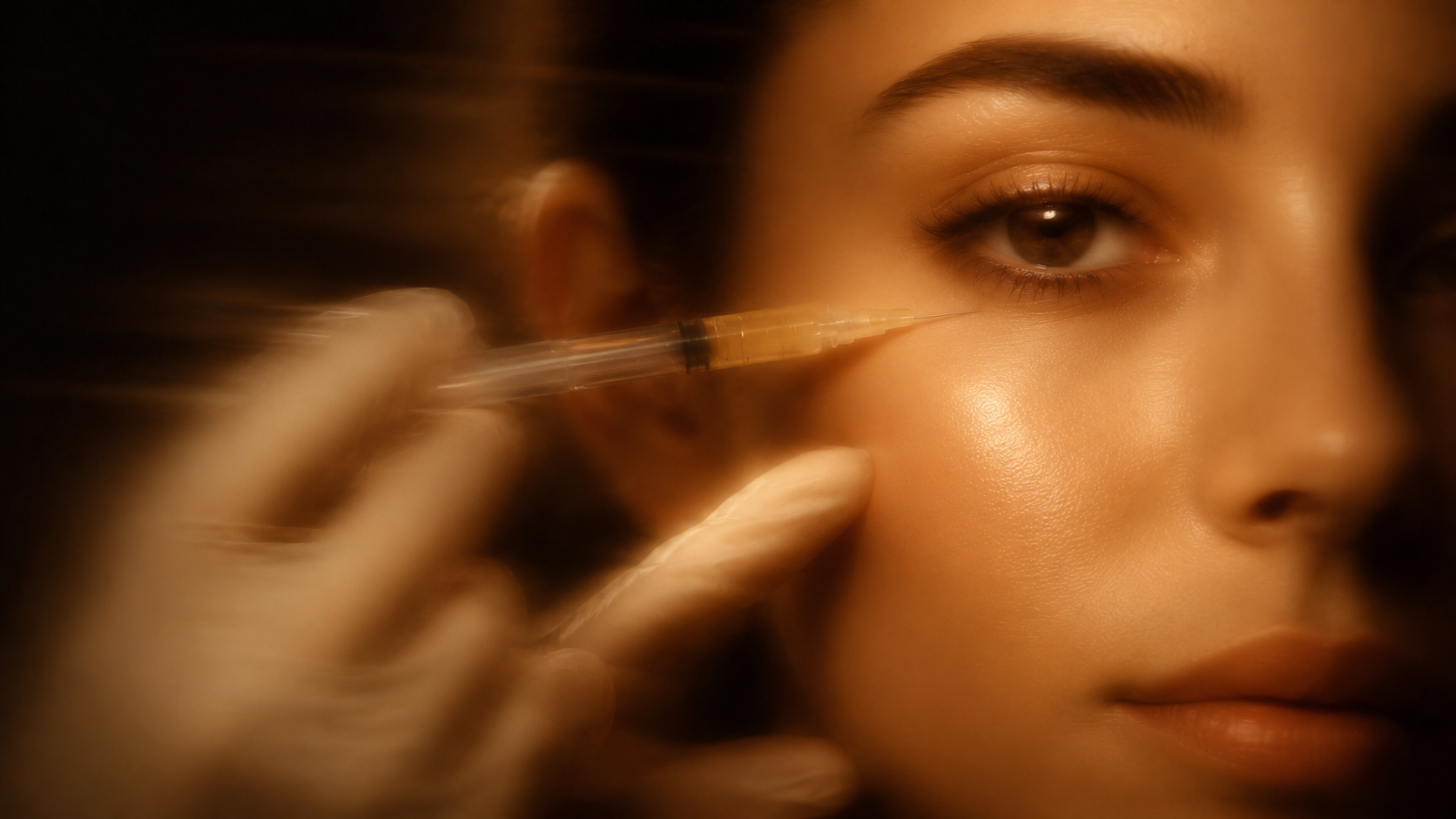
This isn’t about adding anything foreign to your skin. It’s rejuvenation from within, using your own biology to do the work. Once we deliver nanofat into the skin, through injections or microneedling, your own cells go to work on your fibroblasts — the cells responsible for collagen — switching them back on and encouraging them to repair, rebuild, and regenerate.
Over the following weeks, this shows up as visibly improved texture, firmer elasticity, and skin that simply looks and feels more alive — powered entirely by cells that were already yours.
This is one of the most established regenerative approaches in aesthetic medicine, and one our team knows deeply: we’ve been working with fat-derived regenerative techniques for over a decade, with our specialists among the early clinicians exploring this field — directly involved in the research that shaped how it’s used today.
Traditional fat grafting is used to restore volume and reshape facial contours. Nanofat, in contrast, is processed into a liquid regenerative solution used to improve skin quality, texture, and tissue vitality.
Because nanofat uses the patient’s own biological tissue, the risk of allergic reactions or rejection is very low. The procedure is performed using carefully controlled medical techniques to ensure safety and sterility.
Initial improvements in skin quality may appear within several weeks. Regenerative changes in tissue quality may continue to develop over 2–3 months.
Both Nanofat and SVF (Stromal Vascular Fraction) come from the patient’s own fat tissue and are used in regenerative medicine. The difference lies mainly in how the fat is processed and what the final product contains.
Nanofat is produced by mechanically processing and filtering the fat, creating a very fine liquid that contains regenerative components such as stem cells and growth factors. It is mainly used to improve skin quality, texture, and tissue vitality, rather than to add volume.
SVF is a more concentrated cellular fraction of fat tissue that contains a higher number of regenerative cells, including stem cells. It is usually obtained through more complex laboratory processing.
In simple terms:
• Nanofat – mechanically processed regenerative fat used mainly for skin rejuvenation and improving skin quality.
• SVF – a more concentrated cell fraction of fat obtained through additional processing.
Both approaches use the regenerative potential of your own fat tissue, but nanofat is the technique more commonly used in aesthetic regenerative treatments for improving skin quality and tissue vitality.