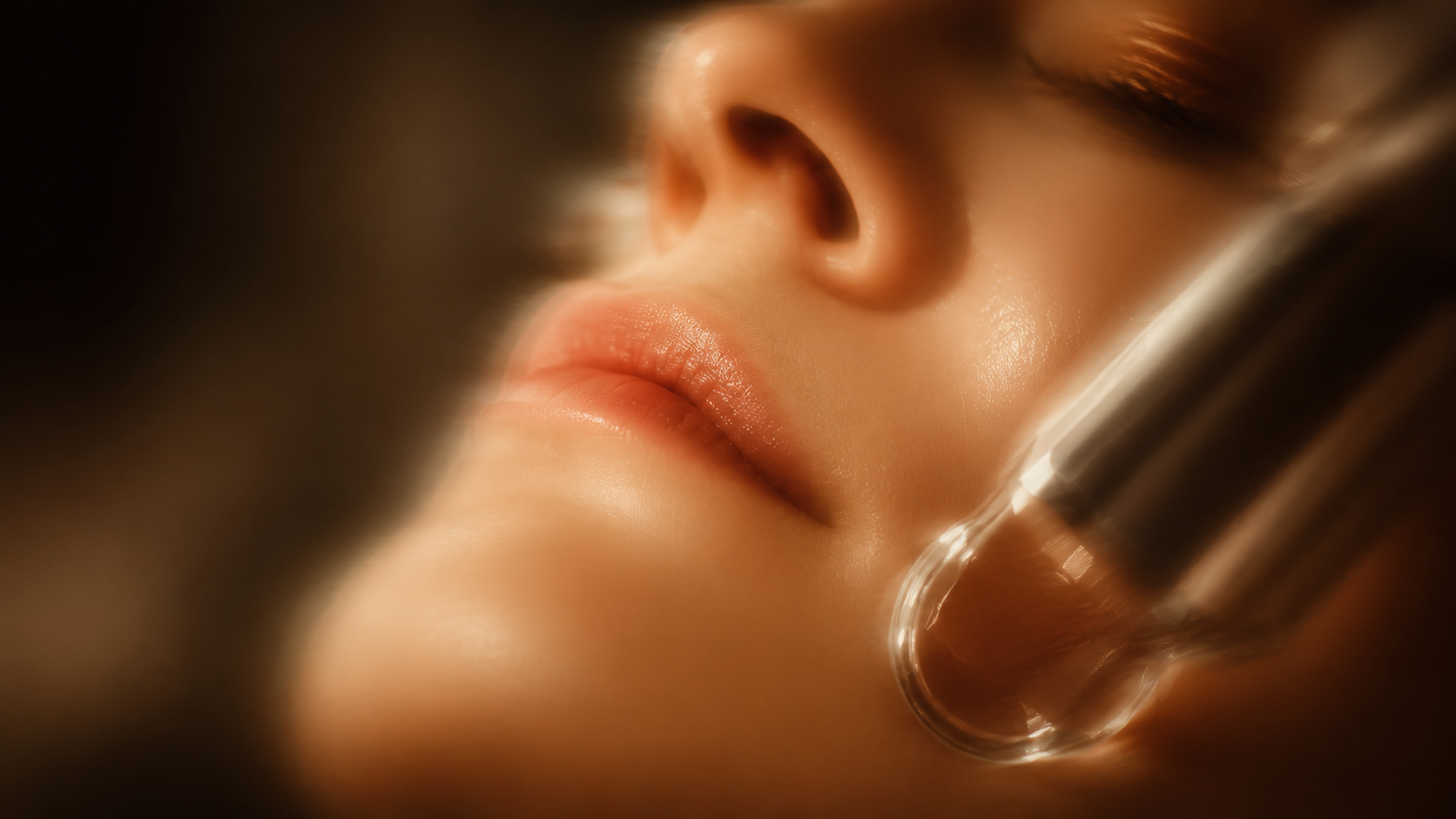
Laser resurfacing uses precise pulses of light energy that are absorbed by the water in your skin cells. This energy gently removes the outer layer of skin (the epidermis) while heating the deeper layer beneath it (the dermis). This controlled heating triggers your skin’s natural healing response, stimulating the production of new collagen and elastin. As the skin heals and regenerates over the following days and weeks, it becomes smoother, tighter, and more even in tone and texture.
Many devices allow the treatment to be delivered in a fractional pattern — treating the skin in a grid of tiny micro-columns rather than the entire surface at once. This leaves areas of untouched skin between the treated columns, which speeds up healing while still delivering visible, long-lasting results.
Your practitioner can adjust the depth and intensity of the treatment to match your specific skin concerns — from fine lines and uneven texture to acne scarring and sun damage — balancing the strength of the results with your desired downtime.
Laser skin resurfacing can be performed at different intensity levels, depending on the skin condition and treatment goals.
With lighter resurfacing treatments, the procedure focuses on improving skin texture, tone and pore appearance with minimal disruption to the skin surface. In these cases, recovery typically involves mild redness for 1–3 days with minimal peeling or sensitivity. Because the treatment is more conservative, 2–3 sessions may be recommended to achieve optimal results.
With deeper resurfacing treatments, the laser stimulates a stronger regenerative response in the skin and is used to address concerns such as deeper wrinkles, acne scarring and more significant texture changes. Recovery may involve visible redness and skin renewal for about 7–10 days, and in some cases up to 10–14 days, depending on treatment depth. Due to the higher intensity, one treatment is often sufficient, although the plan is always personalised.
During consultation, the treatment intensity is carefully selected based on skin condition, treatment goals and acceptable recovery time, allowing us to balance effective skin renewal with patient comfort and safety.
Laser skin resurfacing may be suitable for patients experiencing:
• uneven skin texture
• enlarged pores
• fine lines and early wrinkles
• acne scarring
• sun-related skin damage
During consultation, the treatment intensity is selected based on the individual skin condition and treatment goals.
Most treatments are well tolerated.
The procedure is typically performed under topical anaesthetic cream to ensure patient comfort. Patients usually describe the sensation as warmth or mild tingling rather than pain.
Initial improvements in skin brightness and smoothness may be noticeable within 1–2 weeks.
However, collagen remodelling continues over time, so improvements in skin texture and quality typically develop gradually over several months.
Post-treatment care depends on the intensity of the resurfacing treatment, as lighter and deeper protocols affect the skin differently.
After lighter resurfacing treatments, where recovery is typically 1–3 days, it is recommended to:
• avoid direct sun exposure and use daily broad-spectrum SPF
• avoid excessive heat such as saunas, steam rooms or hot baths for 2–3 days
• avoid intense physical exercise for 24–48 hours
• use gentle skincare products and avoid active ingredients such as retinoids, strong acids or exfoliants for several days
These precautions help the skin recover comfortably while supporting healthy skin renewal.
After deeper resurfacing treatments, where recovery may last 7–14 days, the skin requires more careful protection while it regenerates:
• avoid direct sun exposure until the skin has fully recovered
• avoid heat (sauna, steam room, hot baths) and strenuous exercise for about one week
• avoid exfoliating or active skincare products until the skin barrier has restored
• keep the skin well hydrated and follow the recommended healing skincare protocol
Your practitioner will provide personalised post-treatment instructions based on the treatment intensity and your individual skin condition to ensure safe healing and optimal results.