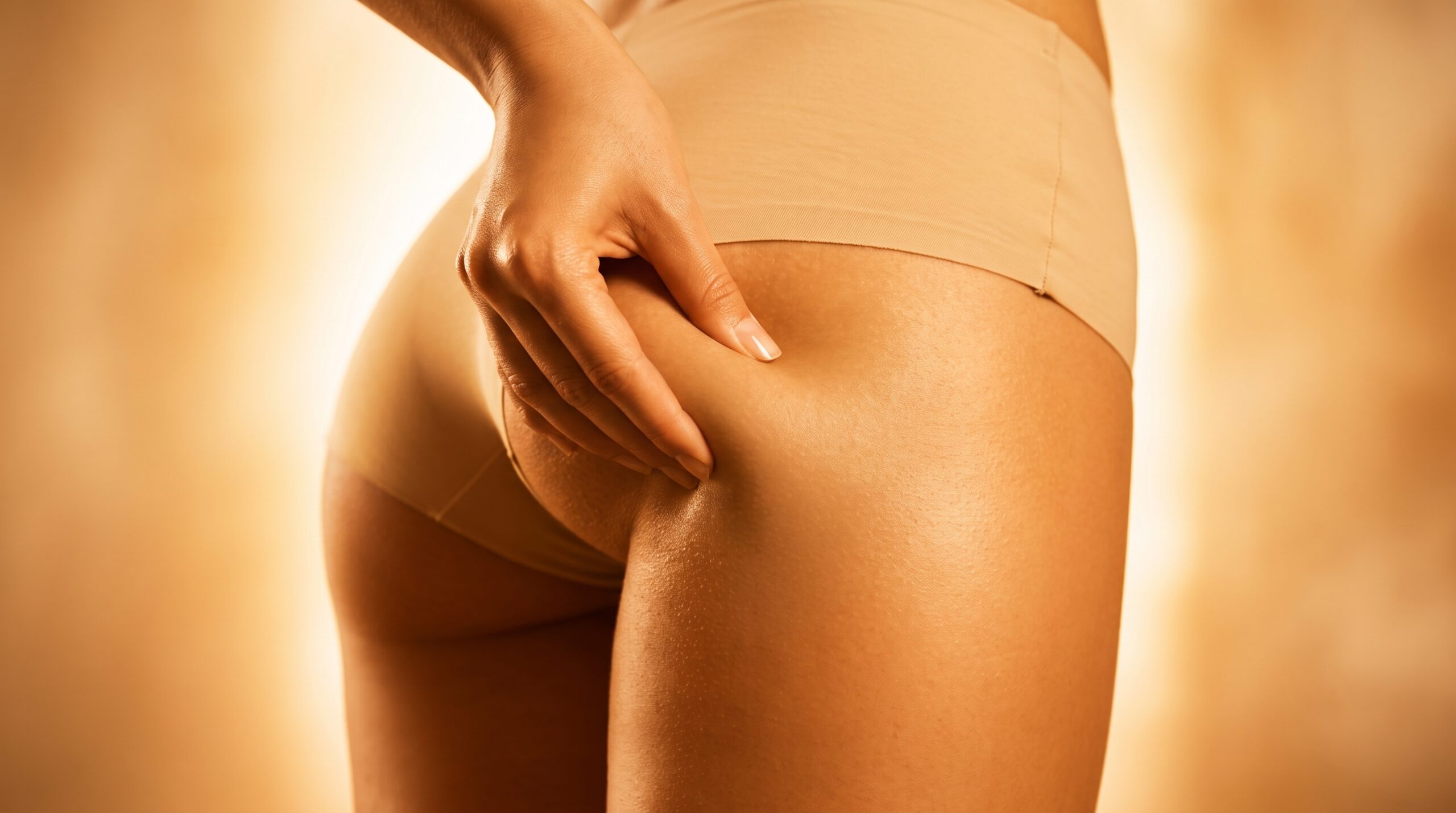
The treatment solution is injected directly into the affected tissue, where its combination of hyaluronic acid and amino acids stimulates the skin’s natural production of collagen and elastin — rebuilding the extracellular matrix, the structural “scaffolding” that supports skin firmness. At the same time, its alkaline component helps neutralize tissue acidity, a condition that fuels inflammation and worsens cellulite. This also improves microcirculation, supporting better nutrient delivery and waste removal, and helping to relax the fibrous bands responsible for skin dimpling.
The injection technique is adapted to the severity of the cellulite. The combined effect is a gradual improvement in tissue quality: fibrosis is reduced, circulation is restored, and the skin’s own regenerative processes are reactivated, leading to smoother, firmer, more even-looking skin.
Before treatment, we identify factors that influence cellulite development, such as inflammation, connective tissue weakness, hormonal imbalance, or metabolic factors. We believe treatment should never be performed blindly — these insights allow us to tailor the approach to your individual biological profile.
Lipolytic injections are designed primarily to break down fat cells.
Regenerative Cellulite Remodeling works differently. The treatment focuses on improving the structural quality of the skin and connective tissue, helping restore the extracellular matrix and supporting collagen and elastin production.
Because cellulite is often related to changes in the connective tissue structure rather than fat alone, improving dermal integrity can play an important role in smoothing the skin surface.
In some cases, lipolytic injections may be used as a complementary treatment to address localised fat deposits as part of a combined cellulite treatment strategy.
Energy-based treatments, such as radiofrequency or other energy devices, typically stimulate collagen production through thermal or mechanical stimulation.
Some of these technologies may also help reduce fat by heating and disrupting adipose tissue.
Regenerative Cellulite Remodeling works through a different mechanism by providing biological building blocks for extracellular matrix repair, helping fibroblasts restore the dermal structure.
For many patients, these approaches can be complementary, combining regenerative support of the skin with technologies that improve tightening or fat reduction.
Some improvements in skin hydration and texture may appear within 7–10 days.
More visible improvements in skin firmness and surface smoothness usually develop gradually over 4–8 weeks as collagen remodeling and tissue regeneration continue.
Yes.
Regenerative Cellulite Remodeling is often combined with other treatments that improve skin tightening, connective tissue structure or body contour, such as:
• radiofrequency-based therapies
• energy-based body contouring devices
• subcision procedures
• regenerative injectable treatments
Combining treatments may provide more comprehensive improvement in skin quality and cellulite appearance, depending on the individual patient’s needs.
Regenerative Cellulite Remodeling is designed for patients who want to improve skin quality and the structural integrity of the skin in areas affected by cellulite.
The treatment may be suitable for individuals who:
• notice early or moderate cellulite
• experience reduced skin firmness or elasticity
• have uneven skin texture, particularly on the thighs or buttocks
• want to improve skin quality rather than simply reduce fat
• prefer regenerative treatments that support natural tissue repair
In many cases, the treatment may also be used as part of a broader body regeneration strategy, combining different therapies to improve skin structure, circulation and connective tissue health.
Why does cellulite develop?
Modern research shows that cellulite is not only related to fat accumulation.
Cellulite develops due to structural changes in the skin and connective tissue, including:
• weakening of the dermal collagen network
• fibrous connective tissue bands pulling the skin downward
• reduced skin elasticity
• impaired microcirculation
• inflammatory processes within connective tissue
These changes affect the extracellular matrix (ECM) — the structural framework that maintains healthy skin.
When the ECM weakens, the skin surface may become uneven and characteristic dimpling may appear.
Regenerative Cellulite Remodeling focuses on restoring the strength and quality of this structural framework, helping improve skin density, elasticity and overall skin texture.