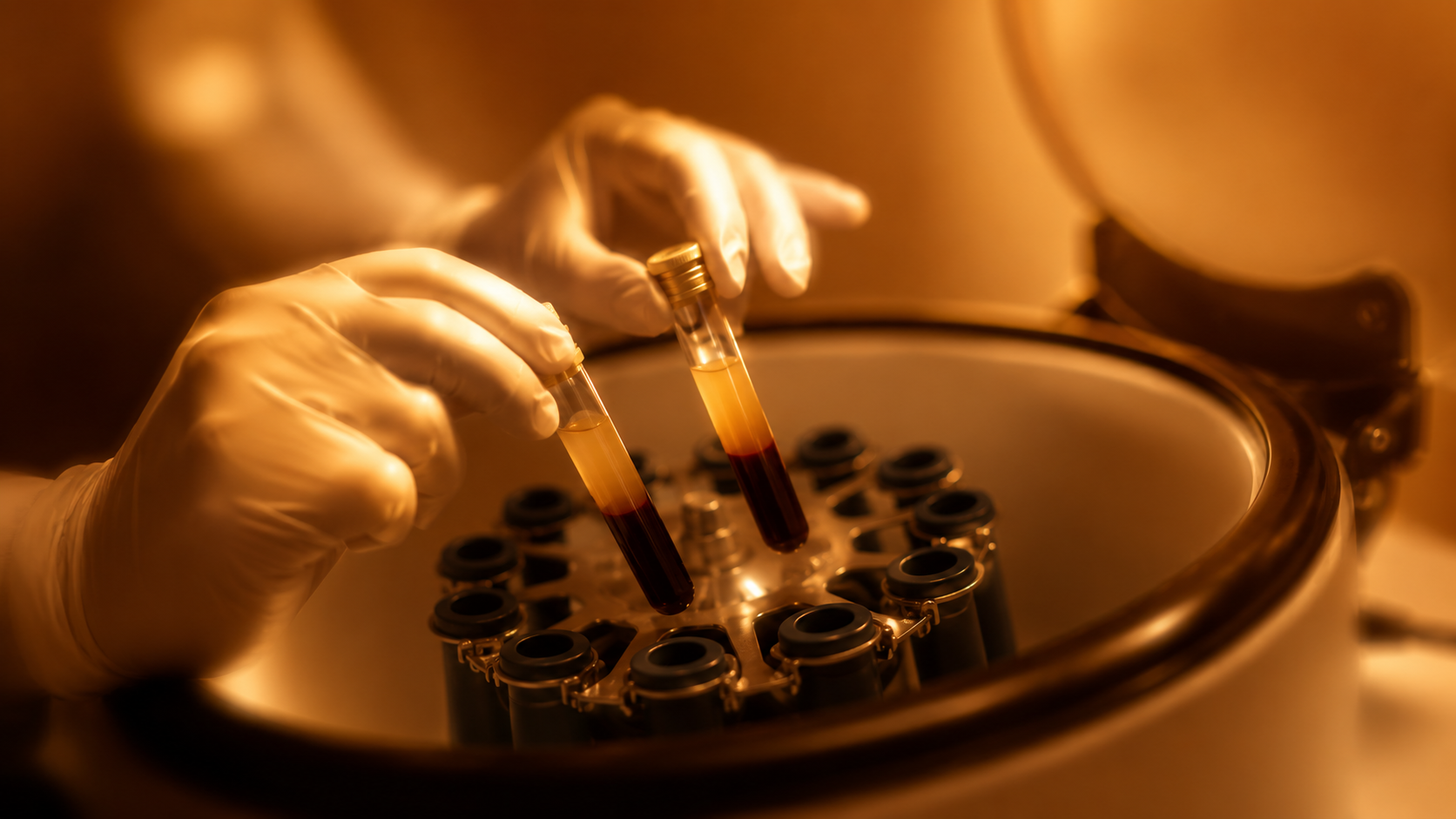
Treatment begins with a simple blood draw, just like a routine lab test. Your blood is then processed in a centrifuge, which separates and concentrates the platelets — the cells richest in growth factors that drive your body’s natural repair processes.
The PRP is first delivered through intradermal injections, placing growth factors precisely where deeper skin renewal begins. We then follow with superficial microneedling, creating micro-channels that let the remaining PRP penetrate the upper layers of the skin. This two-step approach lets the treatment work on both levels at once — supporting deeper structural renewal while also refreshing skin texture and tone on the surface.
At a cellular level, these growth factors signal your skin cells to produce more collagen and elastin, while also improving microcirculation and nutrient delivery to skin — processes that slow down with age. The result is a gradual, natural-looking improvement in skin firmness and texture, as your skin’s own regenerative capacity is reactivated.
Because PRP’s effectiveness depends on your internal biological state, we assess key blood markers beforehand to rule out factors like active inflammation or infection. We believe PRP should never be performed blindly.
Unlike fillers or synthetic products, PRP uses the patient’s own biological material to stimulate natural regeneration processes in the skin.
Some improvements in skin texture and vitality may appear within 2–3 weeks, while deeper regenerative changes develop gradually over 1–3 months.
Most patients experience only mild discomfort. A topical numbing cream may be applied to improve comfort.
Yes. PRP is often combined with microneedling, radiofrequency microneedling, or other regenerative treatments to enhance skin regeneration and overall results.
PRP contains a high concentration of platelet-derived growth factors, natural biological signals that help activate the skin’s repair processes.
These growth factors stimulate fibroblasts, improve microcirculation, and support the formation of new small blood vessels, which enhances the delivery of oxygen and nutrients to the skin.
Because blood circulation and cellular activity naturally decline with age, improving microcirculation helps restore healthier tissue function, better skin vitality, and more effective regeneration.